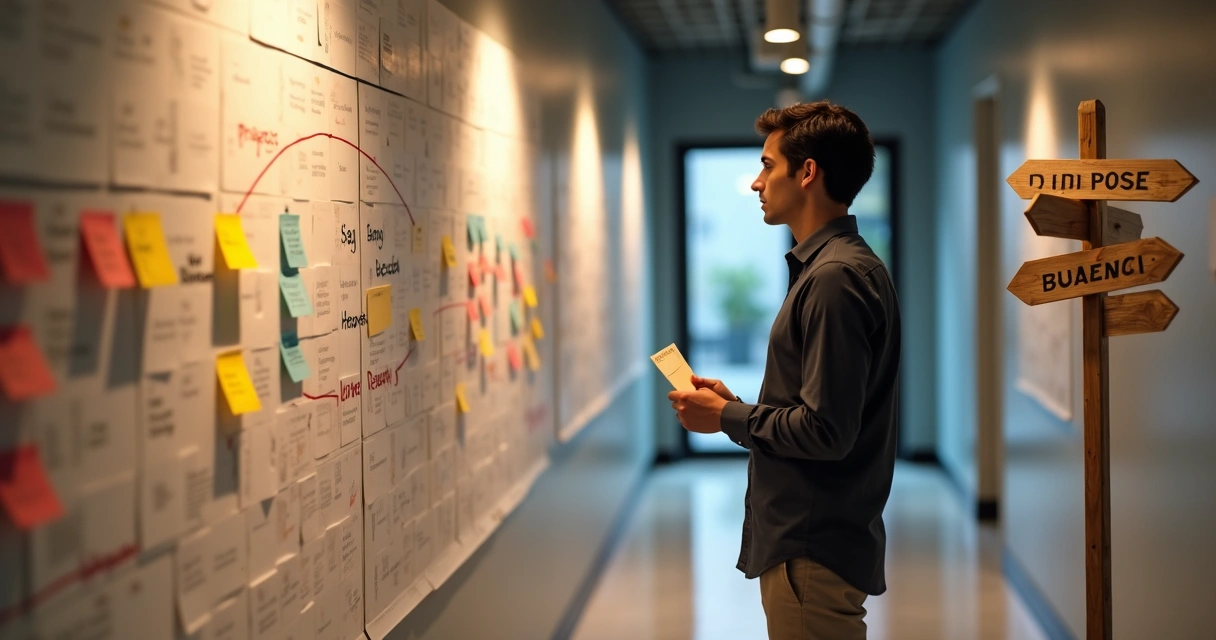

It is easy to recognize that sense of inner stagnation. The days seem to repeat themselves. Our energy may dip, motivation shrinks, and we notice a growing gap between what we want and what we actually experience. Sometimes, the hardest part is not the problem itself but the feeling that we are no longer steering our own course.
In our experience, this feeling rarely disappears on its own. It asks something from us: awareness, curiosity, and above all, responsibility for our own path. When we acknowledge that some things are within our reach, the sense of paralysis can slowly turn into movement.
What does it mean to take personal responsibility?
Personal responsibility is more than doing what we are told or carrying out obligations. It is the steady habit of recognizing where our choices, thoughts, or emotions begin and end. That means noticing when we are reacting rather than responding, when we are blaming rather than learning, and when we are waiting instead of acting.
Personal responsibility is the decision to respond actively to our own life, rather than passively allowing circumstances to dictate our direction.
Being responsible in this sense does not mean ignoring what is outside our control. Instead, we learn to focus on what we can do, even when faced with limits or setbacks.
Why we sometimes feel stuck
When we feel stuck, our inner dialogue often takes on a certain shape. We might think, "I have no choice," "This always happens to me," or "If only things were different." These thoughts are understandable, but they can prevent us from taking small, practical steps—steps that may not fix everything, but can change how we navigate.
We believe that unlocking personal responsibility is not about forcing ourselves forward or pretending to be unaffected by disappointment. Instead, it is a quiet willingness to ask new questions. Sometimes, the right question can open a door that felt sealed shut.
The seven questions that unlock personal responsibility
We have found that asking ourselves certain questions can shift our stance from passive to active, from blaming to learning, and from waiting to deciding. These questions are not magic, but they are useful. Take your time with each—sometimes a single answer can change more than you expect.
- What am I actually feeling right now? Instead of avoiding discomfort or jumping to solutions, we first need to name what is present. Are we frustrated, sad, tired, resentful, or bored? The clearer we are about our current emotional state, the more grounded our next choice will be.
- What am I telling myself about this situation? Many obstacles gain strength from the stories we repeat to ourselves. Is it true that “There’s nothing I can do”? Is it true that “Everyone else is to blame”? By clarifying these internal narratives, we see what is real and what is just a habitual perspective.
- Where is my power in this moment? This question does not deny challenges, but it invites us to look for even the smallest possible area of choice. Is there something we can say, ask, or try? Is there a step available, even if it is imperfect?
- What have I done (or not done) that helps maintain this situation? It is not about blaming ourselves. It’s about seeing our role with honesty. Are we avoiding a conversation? Have we delayed a decision? Often, something we have repeated (or failed to do) is keeping the stuckness alive.
- What do I actually need right now? When we feel stagnant, it may be because a real need is going unmet. Is it rest? Support? Challenge? Connection? Clarity? Knowing what we need helps us move from wishful thinking to practical steps.
- What is the simplest action I could take today? Big plans can feel heavy when we’re stuck. So we ask, “What can I actually do now?” Write one email? Call a friend? Take a walk? Progress often begins with the simplest move.
- If I continue as I am, where will I be a month from now? This question is like a mirror. If we do nothing, what happens? Sometimes, picturing the future without change provides the nudge we need to act, no matter how small.
Small questions change everything.
Bringing these questions into daily life
We have seen firsthand how these seven questions work best when we give them time. It is tempting to rush toward answers, but reflection may take a day or two. Write your thoughts down. Share them with someone you trust if possible. Being unstuck is a process, not a single event.
It is also true that these questions do not end with the first round. Sometimes, the third or fourth attempt gives us something we missed before.

In our experience, it is helpful to treat this process kindly. Harsh self-criticism rarely moves us forward. Instead, curiosity helps, and even a dose of humility. Change starts at the pace of real life, not at the speed of wishful thinking.
How responsibility changes what we see
Asking ourselves better questions often leads not just to new actions, but to a new way of seeing. Responsibility is not a heavy burden to carry—it is the key to coming back into alignment with what matters most.
We notice in ourselves and others that as responsibility grows, excuses and resentments shrink. Relationships become healthier. Impulses to blame or withdraw fade. The focus returns, gently but surely, to the present moment and what can be tried, learned, or changed.

Over time, this shift brings other rewards. We grow more confident because we trust ourselves to respond, no matter what unfolds. We become clearer about what we value and what is not ours to fix. The world may remain unpredictable, but our approach to it becomes much more steady.
Conclusion: Turning questions into movement
When feeling stuck, demanding certainty or quick solutions does not work. What opens doors is a return to responsibility—gently, honestly, and one question at a time.
We have found that life meets us where we meet ourselves. Asking real questions is rarely comfortable, but it is the way we dismantle the walls of inertia. Each answer is a step forward, however modest. What begins with a few honest questions can, over time, bring us much closer to the life and direction we seek.
Frequently asked questions
What is personal responsibility?
Personal responsibility means choosing to own our decisions, actions, and reactions. It is the ongoing practice of noticing where we can act, respond, or change, and not placing blame outside of ourselves when something is within our reach.
How can I stop feeling stuck?
To stop feeling stuck, we suggest starting by noticing your current feelings and then asking yourself honest questions about your situation. Often, writing your answers and taking one simple action—even something very small—can break the pattern of inactivity and restore a sense of movement.
What are the seven unlocking questions?
The seven unlocking questions are: What am I actually feeling? What am I telling myself? Where is my power? What have I done or not done? What do I need? What is the simplest next step? If nothing changes, where will I be in a month? These questions help shift our mindset from passive to active and encourage personal growth.
How do I take more responsibility?
We think the path to more responsibility includes pausing before reacting, identifying your role in challenges, focusing on what you can influence, and choosing small actions over blame or withdrawal. With practice, this becomes more natural and automatic.
Is it worth it to self-reflect?
Yes. Self-reflection helps us understand what drives us, what holds us back, and what we actually want. This understanding gives us the power to make intentional choices, which gradually changes how we experience life and relationships.